
Hello Kitty And Friends World
TapTapTalesEducational
3.8108.00 Reviews
- Version
- 8.5
- Installs
- 1.00M
- Age Rating
- Everyone
Screenshots
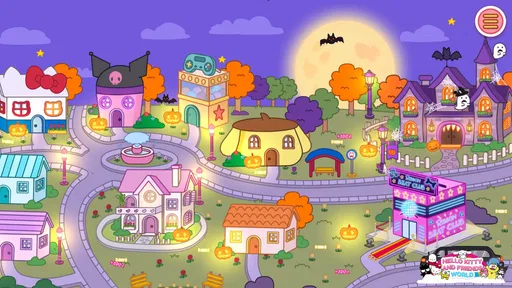
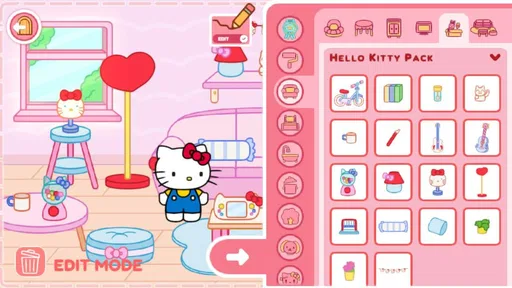
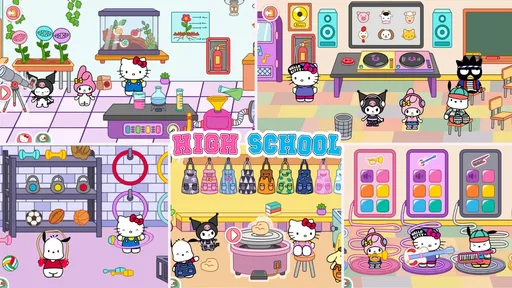
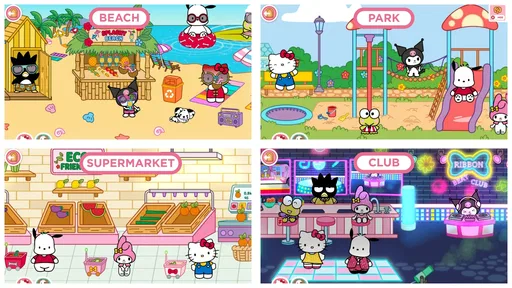
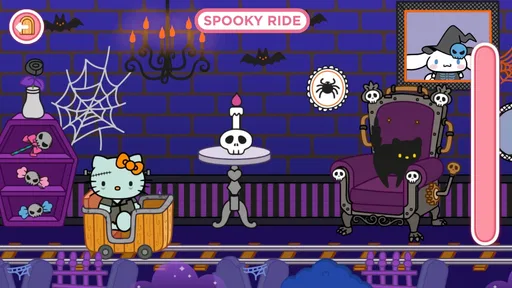
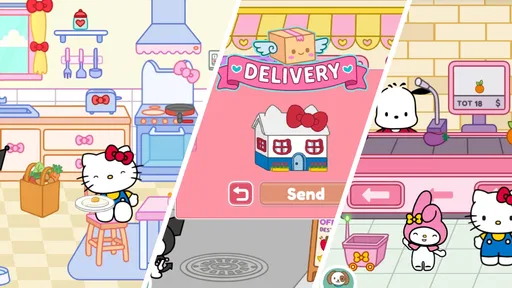
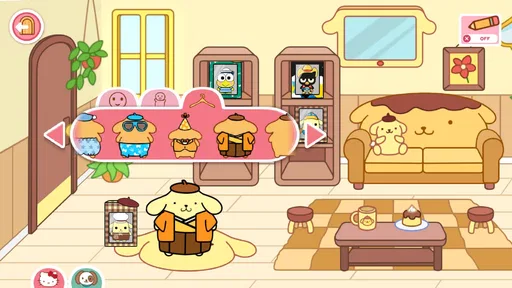
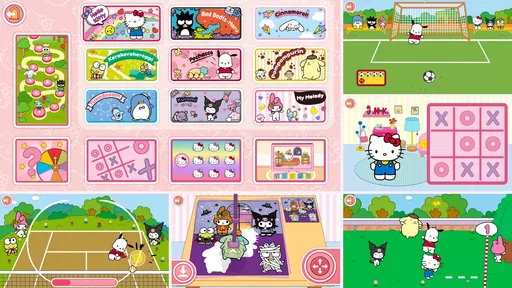
Our Review of Hello Kitty And Friends World
 Analysis by Appyee
I approached Hello Kitty And Friends World as a child-friendly creativity game rather than a traditional challenge-based title. Its appeal comes from spending time in a familiar Hello Kitty setting, making choices, and exploring at a relaxed pace. That makes it easy to recommend for children who enjoy imaginative play, but it also means parents should set the right expectations: this is not a fast action game, a deep strategy game, or a structured learning course.
Developed by TapTapTales, the game sits in the educational category and is free to start. It is rated Everyone, which makes it suitable for a broad family audience, while optional purchases range from $1.99 to $64.99 per item. I would treat that combination as an important part of the setup conversation with a child, especially on a shared phone or tablet.
Getting comfortable with the Hello Kitty world
The first few minutes are best handled with a child beside you. Young players may understand the colorful presentation immediately, yet still need help recognizing what can be tapped, what changes the scene, and what simply decorates it. I found that letting a child explore without rushing produces a better experience than trying to explain every possibility at once.
The most common early frustration is not difficulty in the usual gaming sense. It is uncertainty. A child may tap an object repeatedly because the response is subtle, or move between areas without understanding what the game expects next. When that happens, I suggest slowing down and asking the child what they are trying to do before taking over. That keeps the activity creative instead of turning it into an adult-controlled demonstration.
Another point worth understanding is the difference between an educational label and a lesson app. This game encourages observation, decision-making, and imaginative play, but I would not use it as a replacement for reading practice, mathematics exercises, or a guided classroom activity. Its educational value is strongest when a parent talks with the child about choices, characters, colors, and stories created during play.
What to check before handing over the device
Because the game is free to download but includes optional purchases, I recommend checking the device’s purchase controls before a child starts playing independently. This is more useful than relying on a quick verbal warning. A child who sees an attractive item may understand that it costs money but still not understand that the purchase affects a real account.
I would also make sure the device has a stable connection before the first session, particularly if the game is being opened in a place with unreliable reception. If the screen appears slow or content does not seem to respond, waiting a moment and reopening the game can be more sensible than repeatedly tapping. Rapid tapping often makes it harder to tell whether the problem is a delayed response or an unrecognized interaction.
The current version is 7.2, and the game supports Android 7.0 or later. That makes compatibility worth checking on older family devices. A phone may technically meet the operating-system requirement and still feel uncomfortable for a young player if the screen is small, the battery is nearly empty, or other applications are consuming resources in the background.
For a tablet used by several children, I would create a simple routine: close unrelated apps, charge the device, open the game, and let the child play in a familiar location. This removes several distractions at once. It also makes it easier to notice whether an issue belongs to the game or to the device itself.
Recovering when play does not go as planned
When an interaction seems stuck, my first step is to stop tapping and observe the screen. If the game is still responding elsewhere, I would return to the previous area and try the action again more deliberately. Children often press several objects in quick succession, so a short pause can reveal that the game did register an earlier action.
If the entire app feels unresponsive, I would leave it, close it normally, and reopen it. On an older device, I would first close other demanding apps and check available storage through the device settings. I would not immediately assume that saved progress has disappeared simply because a scene takes time to reload. A calm restart is a better first response than deleting and reinstalling the game.
Reinstallation should be treated as a later step, not a casual fix. Before using it, I would make sure the person playing understands that local progress or preferences can be affected by removing an app. The safest general approach is to try the less disruptive options first: reopen the game, restart the device, update the operating system if appropriate, and check whether the problem occurs only in one location or throughout the whole experience.
There is also a useful family workflow for recurring problems. Note what happened, what the child was doing, whether the device was online, and whether another app behaved normally at the same time. That small record prevents guesswork. If the same issue appears repeatedly after a restart, it becomes easier to describe accurately when seeking technical help.
Separating game problems from device problems
Not every delay, crash, or missing response is caused by the game. A nearly full device, an aging battery, unstable Wi-Fi, aggressive power-saving settings, or a crowded background task can create symptoms that look like an app failure. I would test another ordinary app before deciding that Hello Kitty And Friends World is at fault.
Screen sensitivity can also matter. A child may use a fingertip, a sleeve, or several fingers at once, especially on a tablet shared with siblings. Cleaning the screen and trying a slower, single-finger tap is a simple check that costs nothing. If other apps also fail to recognize touches, the device deserves attention before the game is blamed.
Sound problems require the same kind of separation. I would check the device volume, silent mode, connected headphones, and the sound behavior of another app. Children often assume that a quiet scene means the game has stopped working, when the actual cause is a device setting changed earlier by someone else.
Connection-related trouble can be misleading too. If the game works normally after moving to a stronger network, the problem may be the connection rather than the installation. Restarting the router is not always necessary; first I would see whether other online activities on the same device are also struggling. This avoids changing several things at once and losing track of the real cause.
A better everyday play routine
For a younger child, I would use short, supervised sessions at first. The goal is not to finish everything quickly but to learn how the world responds. Ask the child to describe what they are trying to create or discover. That turns passive tapping into a small storytelling exercise and gives the educational category more practical meaning.
A useful routine is to let the child choose one activity or area, explore it, and then explain what changed. This works especially well when the child becomes frustrated by an unexpected result. Instead of correcting the action immediately, I would ask whether the result could become part of the story. That approach fits the game’s creative tone better than treating every mistake as something that must be undone.
On a family tablet, I would agree on a clear handover rule. One child plays while another watches, then they switch after a natural stopping point. This reduces accidental purchases, prevents arguments over rapid tapping, and gives each child time to make their own choices. It is a small practical detail, but it can make the difference between a calm activity and a noisy one.
I would also keep expectations realistic around replay value. Children who enjoy decorating, exploring, and inventing scenarios may return often, while children who need explicit goals, scores, or increasingly difficult levels may lose interest sooner. The game is better suited to open-ended play than to a progress race.
How it compares with other children’s games
Compared with puzzle games, this title is gentler and less focused on finding one correct answer. That is a strength for children who become discouraged by failure, but a weakness for players who want clear feedback and a steady increase in difficulty. A conventional puzzle app may be the better choice when the goal is practicing shapes, matching, memory, or logic in a measurable way.
Compared with video-based children’s apps, this game asks the child to interact rather than simply watch. That can encourage more active attention, although it also means a child may need help understanding what to do next. If a family wants a quiet background activity, a video app may feel simpler. If the aim is to let a child make choices inside a familiar fictional world, this game has the more hands-on role.
Compared with larger open-world children’s games, Hello Kitty And Friends World feels more approachable for families who want a recognizable theme without introducing a complicated competitive system. The trade-off is that fans seeking a highly detailed simulation or long-term mastery may find it limited. I would choose it for relaxed creative sessions, not for a child asking for a game with demanding progression.
The Hello Kitty setting is central to the experience. Children who already like the characters are likely to engage more quickly, while children with no connection to the brand may need another reason to stay interested. That is not a flaw, but it is an important selection point: the theme does much of the emotional work.
Who should use it, and who should skip it
I think the game is a good fit for young children who enjoy imaginative play, familiar characters, and gentle exploration. It also works for parents looking for something they can join briefly after school or during a quiet weekend period. The free entry makes it easy to try before deciding whether the style suits a particular child.
I would be more cautious if the child is likely to press purchase buttons without asking, or if the device belongs to several family members and has no clear purchase safeguards. The optional items are not a reason to reject the game outright, but they do make supervision and account settings part of responsible use.
I would skip it for a child who specifically wants competitive play, complex problem-solving, or a clearly staged curriculum. I would also look elsewhere if the main purpose is independent educational practice with visible scores and defined learning objectives. This title can support conversation and creativity, but it does not replace a focused educational tool.
Parents should also consider the device experience. On a small or older phone, a child may find the controls less comfortable than on a larger screen. If the game is being used during travel, test it before leaving rather than discovering connection or performance problems in the car or on a plane. A short trial at home is enough to reveal whether the device feels suitable.
What the ratings and popularity suggest
The game has an average rating of 3.5 from around 2.5 thousand ratings, with over 1 million installs. I read that combination as a sign of broad curiosity rather than universal satisfaction. Many families are willing to try the Hello Kitty world, but the middling average suggests that expectations and device experiences can vary.
There are also around 86 written reviews, which can be useful for spotting recurring kinds of frustration, but I would not judge the entire game from one dramatic comment. Look for patterns involving responsiveness, purchases, compatibility, or whether children actually return to play. A child’s reaction after several short sessions is more relevant to your household than popularity alone.
The game’s free price lowers the risk of trying it, yet the purchase range means “free” should be understood as free to begin, not necessarily a promise that every optional part is included. I would explain this to an older child in plain language and keep younger children supervised. That simple step protects the family budget while preserving the relaxed nature of the game.
My practical verdict
After using it with a troubleshooting mindset, I see Hello Kitty And Friends World as a pleasant, accessible creativity game with a strong appeal for children who already enjoy Hello Kitty. Its best moments come from unhurried exploration and shared storytelling, not from chasing scores or completing difficult objectives.
The setup is straightforward when the device is compatible, reasonably responsive, and prepared for a child’s use. Most avoidable friction comes from rushing the first session, ignoring purchase controls, or blaming the game for general device or connection problems. A short supervised introduction solves many of those issues before they become complaints.
My strongest recommendation is to treat it as a shared creative activity first and an independent app second. Give the child room to explore, but keep an adult nearby until the controls and purchase boundaries are clear. That balance lets the game’s gentle style work in its favor.
For families wanting a free starting point into a colorful Hello Kitty environment, it is worth trying. For children who need structured lessons, measurable progression, or challenging puzzles, another educational game will probably be a better match. In my view, the right question is not whether it is the most advanced children’s game, but whether your child enjoys making small choices and turning them into their own playful stories.
Privacy and Permissions
See what permissions an app requests and how it handles your data.
- Microphone
- record audio
- Other
- view network connections, pair with Bluetooth devices, full network access, change your audio settings, prevent device from sleeping, Google Play license check
Verdict
Strengths of Hello Kitty And Friends World
- Colorful, polished visuals appeal to younger players.
- Simple controls make it easy for children to pick up.
- Multiple characters offer variety beyond Hello Kitty.
- Creative activities encourage imaginative, open-ended play.
- Regular events can provide fresh seasonal content.
Limitations of Hello Kitty And Friends World
- Some items and activities may require in-app purchases.
- Progress can feel slow without spending money.
- The game may take considerable storage space over time.
- Limited challenge may disappoint older or experienced players.
- Parental supervision is recommended for ads and purchases.
Similar Picks in This Category
View All
Little Panda Policeman
BabyBus4.0

Monster Trucks Game for Kids 2
Raz Games4.1

Little Panda's Chinese Recipes
BabyBus4.4

Little Panda's Restaurant
BabyBus4.4

Little Panda's Ice Cream Games
BabyBus4.3

Baby Panda Care
BabyBus3.8
Frequently Asked Questions
What is Hello Kitty And Friends World?
Hello Kitty And Friends World is a casual lifestyle and creativity game centered on Hello Kitty and her Sanrio friends. Players can decorate rooms, customize characters, create outfits, explore themed locations, and build their own colorful stories. The game is designed for relaxed, family-friendly play rather than competition, making it suitable for users who enjoy decorating, collecting items, and imaginative role-playing.
Is Hello Kitty And Friends World free to download and play?
The game can generally be downloaded for free, but some content may require optional purchases. These can include special furniture, clothing, decorative items, character accessories, or other premium features. The available free content is enough to explore the basic gameplay, although players who want a larger collection or faster access to certain items may encounter in-app purchase offers.
Does Hello Kitty And Friends World require an internet connection?
An internet connection may be needed for the initial download, updates, account-related features, advertisements, and access to certain events or downloadable content. Some parts of the game may work offline after installation, but the experience can vary depending on the device and version. For the most reliable access to all features, it is best to play while connected to Wi-Fi or mobile data.
Is Hello Kitty And Friends World appropriate for children?
Hello Kitty And Friends World uses colorful visuals, simple controls, and gentle activities that are generally appropriate for children and younger players. However, parents should review the age rating for their region and check the available parental controls. Because the game may contain advertisements or optional in-app purchases, it is also advisable to configure purchase restrictions before allowing children to play independently.
What devices are compatible with Hello Kitty And Friends World?
Compatibility depends on the specific Android or iOS version, available storage, and the hardware requirements listed on the official app store page. The game is intended for supported modern smartphones and tablets, but older devices may experience slower loading, reduced performance, or limited access to newer content. Before downloading, check the current store listing to confirm that your device meets the requirements.
Play our best games!


